Cyclopropylacetonitril
| Cyclopropylacetonitril | ||||
|---|---|---|---|---|
| Structuurformule en molecuulmodel | ||||

| ||||
Structuurformule van cyclopropylacetonitril
| ||||
| Algemeen | ||||
| Molecuulformule | C5H7N | |||
| IUPAC-naam | 2-cyclopropylethaannitril | |||
| Molmassa | 81,12 g/mol | |||
| SMILES | C1CC1CC#N
| |||
| InChI | 1S/C5H7N/c6-4-3-5-1-2-5/h5H,1-3H2
| |||
| CAS-nummer | 6542-60-5 | |||
| PubChem | 643447 | |||
| Wikidata | Q13506984 | |||
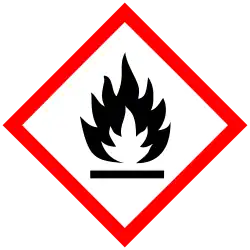
| Waarschuwingen en veiligheidsmaatregelen | ||||
| ||||
| H-zinnen | H226 | |||
| EUH-zinnen | geen | |||
| P-zinnen | geen | |||
| Fysische eigenschappen | ||||
| Aggregatietoestand | vloeibaar | |||
| Dichtheid | 0,878 g/cm³ | |||
| Kookpunt | 142-144 °C | |||
| Vlampunt | ca. 44 °C | |||
| Tenzij anders vermeld zijn standaardomstandigheden gebruikt (298,15 K of 25 °C, 1 bar). | ||||
| ||||

Cyclopropylacetonitril is een cyclopropaanderivaat. Het is een tussenproduct bij de synthese van verschillende farmaceutische stoffen.
Synthese
Dit nitril kan bereid worden door cyclopropylmethylbromide of -chloride (hetgeen het resultaat is van de halogenering van cyclopropylmethanol) met het cyanide van een alkalimetaal te laten reageren. Natriumcyanide is hiervoor geschikt.[2]
Bronnen, noten en/of referenties